The cards
The game uses one deck of 108 cards. Four of the colors are Red, Yellow, Green and Blue, and each color also has its own symbol (flame, sun, leaf and wave), so you never have to rely on color alone. The deck, the piles and the markers on the table are listed below.
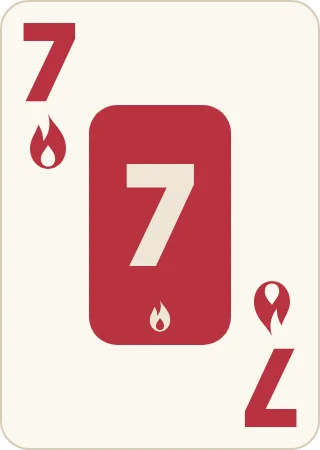
Red number cardsCount: 19
One 0 and two each of 1 to 9, in Red with the flame symbol. A large numeral sits in the corner and in the middle, beside the color's symbol. A number card has no effect when you play it. It only has to match the top card by color or number. Left in a hand when a round ends, it counts the number on it.
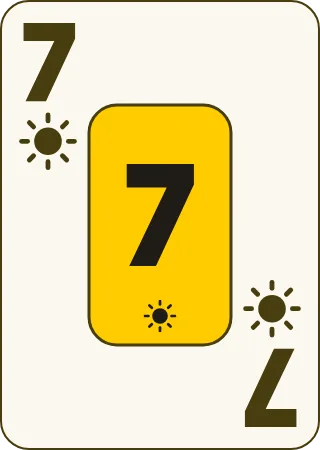
Yellow number cardsCount: 19
One 0 and two each of 1 to 9, in Yellow with the sun symbol. A large numeral sits in the corner and in the middle, beside the color's symbol. A number card has no effect when you play it. It only has to match the top card by color or number. Left in a hand when a round ends, it counts the number on it.
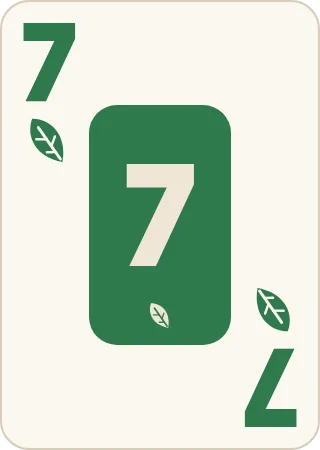
Green number cardsCount: 19
One 0 and two each of 1 to 9, in Green with the leaf symbol. A large numeral sits in the corner and in the middle, beside the color's symbol. A number card has no effect when you play it. It only has to match the top card by color or number. Left in a hand when a round ends, it counts the number on it.
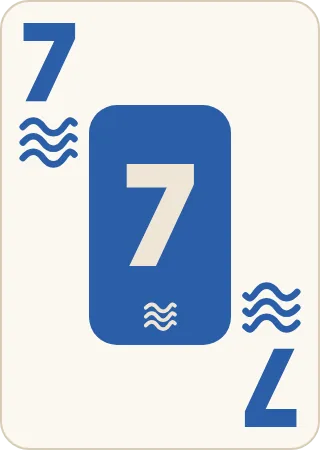
Blue number cardsCount: 19
One 0 and two each of 1 to 9, in Blue with the wave symbol. A large numeral sits in the corner and in the middle, beside the color's symbol. A number card has no effect when you play it. It only has to match the top card by color or number. Left in a hand when a round ends, it counts the number on it.
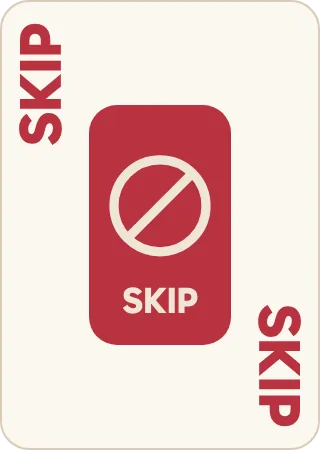
Skip cardsCount: 8
Two per color. The word SKIP and a circle with a diagonal line through it. Play it on its color or on another Skip: the next player loses their turn. Worth 20 points left in a hand.
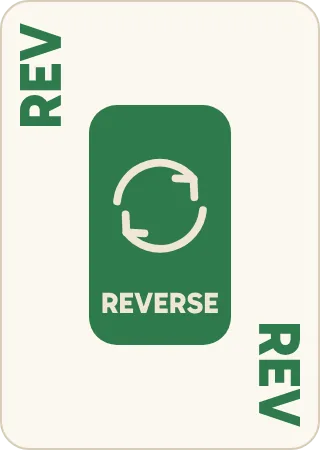
Reverse cardsCount: 8
Two per color. The word REVERSE and two curved arrows pointing in opposite directions. Play it on its color or on another Reverse: play turns around and now travels the other way. With two players it works like a Skip. Worth 20 points left in a hand.
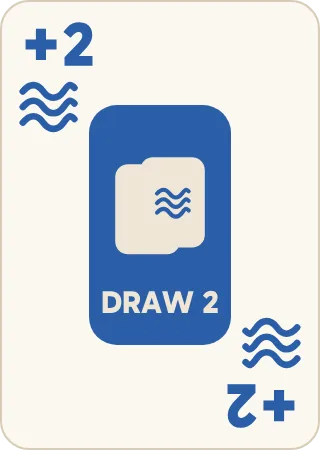
Draw 2 cardsCount: 8
Two per color. The words DRAW 2 and two stacked card outlines with a plus 2. Play it on its color or on another Draw 2: the next player draws two cards and loses their turn. Worth 20 points left in a hand.
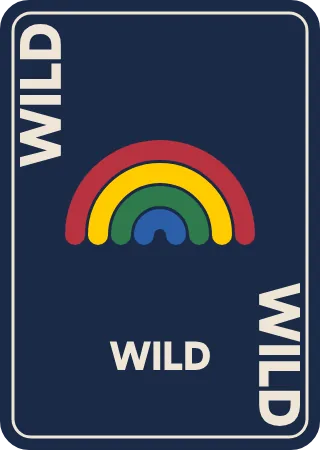
Wild cardsCount: 4
No color of their own. The word WILD and a wheel of the four colors. You can play one on any card, and you choose the color that play continues in. Worth 50 points left in a hand.
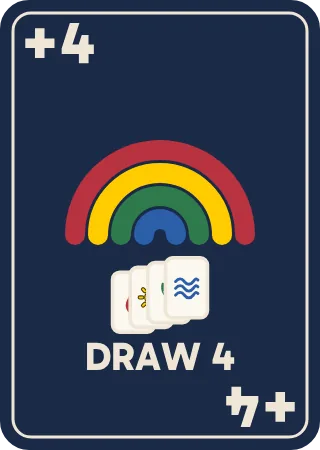
Wild Draw 4 cardsCount: 4
No color of their own. The words WILD DRAW 4 and the four-color wheel with a plus 4. You choose the color, and the next player draws four cards and loses their turn. You may only play one when you hold no card of the color in play. Worth 50 points left in a hand.
108 cards in all.

Card backCount: 108
Every card has the same shared Gamenook back. When a card is face down, nobody can tell it apart from any other.

Draw pileCount: 1
A face-down stack. Everyone can see how many cards it holds but not what they are. Cards are taken from the top, one at a time, when a player has to draw.
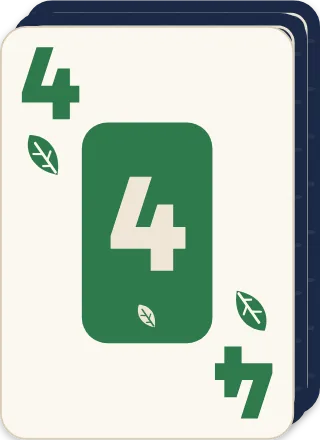
Discard pileCount: 1
A face-up stack. Each played card goes on top. The top card decides what can be played next, and anyone can look through the whole pile in order.
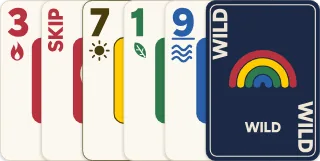
Your handCount: 7
The cards only you can see. You start with seven. It is always shown sorted: Red, Yellow, Green, then Blue, with numbers in order and then Skip, Reverse and Draw 2, and the Wild cards last.
Card-count badgeCount: 1 per playerOn screen
A small number next to each player showing how many cards they hold. A player down to one card is shown only by this number.
Direction ringCount: 1On screen
A ring around the table with an arrow showing which way play is going. It turns around when a Reverse is played.
Every player is dealt seven cards and one card is turned up to start the discard pile. The rest is the draw pile, so its size depends on how many are playing.
| Players | Cards each | Turned up | Draw pile after the deal |
|---|---|---|---|
| 2 | 7 | 1 | 93 |
| 3 | 7 | 1 | 86 |
| 4 | 7 | 1 | 79 |
| 5 | 7 | 1 | 72 |
| 6 | 7 | 1 | 65 |
| 7 | 7 | 1 | 58 |
| 8 | 7 | 1 | 51 |
| 9 | 7 | 1 | 44 |
| 10 | 7 | 1 | 37 |
Every card has three parts that matter. The corner index shows the number or the action picture and is the part you see when your hand is fanned out. The color symbol sits beside it. The central picture is the large drawing in the middle. Action cards show their name in words as well as a picture.
Goal
Wild Cards is a game about getting rid of things. Every player starts with seven cards. On your turn you lay one card on a shared pile, but only if it matches the card on top. The first player to empty their hand wins the round.
Along the way, special action cards can skip a player, turn the order of play around, make the next player draw cards, or let you pick the color that everyone must follow. When a round ends, the cards still held by the other players are counted up and the winner scores that total. The Scoring section explains how, and the Options section lists the house rules a host can switch on.
Setup
You do not shuffle or deal by hand. The table does it, using the steps below, and it deals fresh cards at the start of every round.
- The deck is shuffled.
- Every player is dealt seven cards, one at a time, starting with the player after the dealer. The first dealer is the first seat, and the deal moves to the next player at the start of each new round.
- The top card of what is left is turned face up to start the discard pile. This is the starter card. The rest is the draw pile.
- Play begins with the player after the dealer and goes clockwise.
The starter card can be an action card. It then has an effect before the first turn, listed here. The first player is the one after the dealer.
| Starter card | What happens |
|---|---|
| A number card | Nothing special. The first player takes the first turn. |
| Skip | The first player is skipped. The player after them goes first. |
| Reverse, three or more players | Play turns around. The dealer goes first. |
| Reverse, two players | It works like a Skip, so the dealer goes first. |
| Draw 2 | The first player draws two cards and loses their turn. These two cards can never be stacked on. |
| Wild | The first player chooses the color, then takes the first turn. |
| Wild Draw 4 | It can never start the game. It goes back into the draw pile, the pile is reshuffled and a new card is turned. |
Example A sample hand and how it is shown
starting hand of seven cards, shown sorted [flame-3, flame-7, sun-0, sun-skip, leaf-5, wave-5, wild]
- The hand lists Red cards first. Here that is Red 3 and Red 7, in number order.
- Yellow comes next, so the Yellow 0 and then the Yellow Skip. Numbers always come before action cards of the same color.
- Green 5 and Blue 5 follow, one for each of those colors.
- The Wild card has no color, so it is always at the end.
Whatever you are dealt, you see it in this order, and a card you draw slots into its place straight away. You never need to sort by hand.
A turn
On your turn you do one of two things: play a card, or, if you have nothing you can play, draw. Here are the steps in order.
- Look at the top card of the discard pile and at the color in play.
- If you hold any playable card, you must play one. Any playable card will do. You are never forced to pick the best one.
- If you hold no playable card, draw one card from the draw pile. If that card is playable you must play it straight away. If it is not, it stays in your hand and your turn ends.
- If the card you played is a Wild card, say which color comes next.
- The card's effect happens, and the turn moves on.
A card is playable when at least one of these is true:
- Its color is the color in play.
- It has the same number as the top card.
- It has the same action as the top card, for example a Skip on a Skip of another color.
- It is a Wild card. The Wild Draw 4 has an extra condition, explained under Wild Draw 4.
When the top card is a Wild card, only its color counts. Numbers and actions cannot match a Wild, so you must follow the color that was chosen.
Example Which cards can you play?
top card wave-7, color in play Blue; hand [flame-2, flame-7, sun-9, leaf-5, wave-3, wave-skip, wild]
- Red 2 is not Blue and is not a 7, so it cannot be played.
- Red 7 has the same number as the top card, so it can be played.
- Yellow 9 and Green 5 match neither the color nor the number, so they cannot be played.
- Blue 3 and the Blue Skip are Blue, so both can be played.
- The Wild can always be played.
You have four playable cards: Red 7, Blue 3, Blue Skip and the Wild. You must play one of them, and you choose which. You may not draw while any of them is in your hand.
Example Plays the table will not accept
top card flame-4, color in play Red; hand [flame-8, sun-1, leaf-9, wave-2]
- You try to play Green 9. It is not Red and it is not a 4, so the table refuses it and tells you why.
- You try to draw a card instead. The table refuses this too, because Red 8 is playable and you must play when you can.
- You play Red 8, the only card you may play.
A refused move changes nothing. No card is drawn, you lose no turn, you are not penalised and the turn timer keeps running as before.
When nothing is playable
If you cannot play, you draw exactly one card, unless the house rule Draw until playable is on. A card you draw and can play must be played at once. You cannot swap it for another card in your hand, and you cannot keep it and pass.
Example Drawing when you have nothing to play
top card flame-5, color in play Red; hand [leaf-1, wave-2, wave-8]
- None of your cards is Red or a 5, so nothing is playable. You draw.
- Case A: you draw Red 9. It is Red, so it is playable, and you must play it now. It is the only card you may play.
- Case B: you draw Yellow 3. It is not playable, so it joins your hand and your turn ends.
In case A you hold three cards afterwards, [leaf-1, wave-2, wave-8]. In case B you hold four, [sun-3, leaf-1, wave-2, wave-8].
The action cards
Each action card does something when it lands on the discard pile. Unless a rule below says otherwise, the turn then passes to the next player.
- Skip. The next player loses their turn.
- Reverse. The direction of play turns around. With only two players left in the round, a Reverse works like a Skip, so you take another turn straight away.
- Draw 2. The next player draws two cards and loses their turn.
- Wild. You choose the color for the next play. It has no other effect.
- Wild Draw 4. You choose the color, then the next player draws four cards and loses their turn.
The Wild Draw 4 rule
The Wild Draw 4 is the most powerful card, so it has a limit. You may play it only when you hold no card of the color in play. Only a card of that exact color blocks it. These do not block it:
- A Wild card, because Wild cards have no color.
- A card that matches the top card by number or action in a different color.
- Another Wild Draw 4.
If your hand holds a card of the color in play, the Wild Draw 4 simply cannot be played, and the table will not accept the attempt. You must play a different playable card, and that color card is playable by definition.
Example Wild Draw 4: allowed and blocked
top card sun-3, color in play Yellow, three players, no stacking. Hand A [flame-2, wave-4, wild-draw4]. Hand B [flame-2, sun-8, wild-draw4]
- Hand A holds no Yellow card. Red 2 and Blue 4 are not Yellow, and neither is a 3. The Wild Draw 4 can be played.
- A plays it and chooses Red. The next player draws four cards and loses their turn. Play continues with the player after them.
- Hand B holds Yellow 8, a card of the color in play. The Wild Draw 4 cannot be played, and the table refuses the attempt without any penalty.
- B is not allowed to draw either, because Yellow 8 is playable. B must play Yellow 8.
Same card, two different hands, two different results. B still holds the Wild Draw 4 for a later turn, when no card of the color in play is in the hand.
Special cases
When the draw pile runs out
If a card must be drawn and the draw pile is empty, every card in the discard pile except the top one is shuffled to make a new draw pile. The top card stays where it is, so play continues without a break. This only happens at the moment a card is needed.
If there is nothing at all to draw, the draw is simply short or skipped. A player who cannot play and cannot draw passes. A player who can play must still play. A penalty draw that finds the piles empty draws only what is there.
A round nobody can finish
In the very rare case that the draw pile is empty, the discard pile holds only its top card and nobody can play, the round is blocked. Nobody wins it and nobody scores. See How it ends for what follows.
Big hands
There is no limit to how many cards a hand can hold. Hands of twenty cards or more are possible after a few penalties. The hand view is designed to cope with this and stays sorted.
Why a card cannot be played
Cards that cannot be played are shown as such, and you can ask why. The table gives one of a small set of reasons: the card matches neither the color nor the number or action, the card is a Wild Draw 4 and your hand holds a card of the color in play, a draw penalty is waiting and the card cannot answer it, or you have just drawn a card and only that card may be played.
Scoring
When a round ends because a player played their last card, that player wins the round and scores points. The points are the total value of all the cards left in the other players' hands. Your own hand is empty, so you never lose points, and the other players do not change their scores.
| Card | Points |
|---|---|
| Number cards 0 to 9 | The number on the card |
| Skip, Reverse, Draw 2 | 20 each |
| Wild, Wild Draw 4 | 50 each |
If the last card was a Draw 2 or a Wild Draw 4, the next player draws those cards first, and the cards they drew count in the total too. Any other last card has no effect.
Example Counting up a finished round
four players. Player 1 plays their last card. Player 2 holds [flame-5, leaf-skip, wave-9]. Player 3 holds [sun-0, wave-draw2, wild]. Player 4 holds [leaf-1, leaf-7]
- Player 2 holds Red 5 (5 points), Green Skip (20) and Blue 9 (9), which is 34.
- Player 3 holds Yellow 0 (0), Blue Draw 2 (20) and a Wild (50), which is 70.
- Player 4 holds Green 1 (1) and Green 7 (7), which is 8.
- Add them: 34 plus 70 plus 8 is 112.
Player 1 scores 112 points for the round. The other three players score nothing for it.
How it ends
A round ends in one of three ways. A player plays their last card, which is the usual way. Or the round is blocked, as described under special cases. Or so many players leave that fewer than two remain.
What happens next depends on the Scoring option chosen when the table was set up:
- Single round (the default). The game ends with the first round that has a winner. That player wins, and the points from the round are recorded as their score. A blocked round ends the game with no winner.
- Play to a target score. Rounds keep coming. The next dealer is the next player, the deck is shuffled again and scores are carried over. The first player whose total reaches the target wins the game. The target starts at 500 and can be set to any number from 50 to 5000. A blocked round scores nothing and a new round is dealt.
When the game is over, players are ranked. Players who stayed to the end come before players who left. The winner is first. After that, a higher score ranks higher, and if scores are equal, the player with fewer points left in hand in the last round ranks higher. Players still level share a rank.
Options
The person who sets up the table can switch on house rules. All of them are off by default, and each one changes the game in a clear, limited way. They apply to everyone at the table for the whole game.
Stack draw cards
When this is on, a Draw 2 or Wild Draw 4 does not hit the next player at once. The penalty waits, and that player can pass it on by playing a matching card on top. A Draw 2 can only be answered by another Draw 2, of any color. A Wild Draw 4 can only be answered by another Wild Draw 4. The two never answer each other.
While a penalty is waiting you have two choices: play a card that answers it, or take the whole penalty, lose your turn and let play move on. You cannot draw a single card, and you cannot pass. Stacking a Draw 2 sets the color in play to that card's color. Stacking a Wild Draw 4 lets you choose the color, and the strict color test of the Wild Draw 4 rule does not apply to a stacked one.
Example A stack of Draw 2 cards
four players, stacking on. Top card sun-5, color in play Yellow. Player 1 holds [sun-draw2, leaf-4, wave-7]. Player 2 holds [flame-1, leaf-draw2, wave-2]. Player 3 holds [flame-6, sun-1, wave-8]
- Player 1 plays the Yellow Draw 2. A penalty of 2 is now waiting for Player 2.
- Player 2 can take the 2 cards or answer with a Draw 2. Red 1 and Blue 2 cannot be played now. Player 2 plays the Green Draw 2. The color in play becomes Green and the waiting penalty is 4.
- Player 3 holds no Draw 2, so the only choice is to take the penalty. Player 3 draws four cards and loses their turn.
- The penalty is back to nothing. Player 4 takes the next turn, with Green as the color in play.
Player 3 holds eleven cards instead of seven. Without stacking, Player 2 would have drawn two cards and Player 3 would have been untouched.
7-0 swap
A 7 and a 0 gain an effect. Play a 7 and you choose any other player, and the two of you swap your whole hands, whatever their sizes. Play a 0 and every hand moves to the next player in the direction of play, including yours. Both work with two players too. A 7 or a 0 has no effect as the starter card or as your last card, and you cannot play one while a draw penalty is waiting.
Jump-in
You may play out of turn if you hold a card identical to the top card of the discard pile: the same color and the same number or action. The turn then continues from you, in the current direction. Wild cards never qualify. You can jump in on your own card, and a player who has just been skipped may jump in too. If the card is a Reverse, the direction flips and play continues from you. If it is a Draw 2, the next player after you draws. With stacking on, only an identical Draw 2 can jump in on a waiting penalty.
The chance to jump in lasts only while the player whose turn it is has not yet acted. Once any move is made, it has gone.
Draw until playable
When you have nothing to play, you keep drawing, one card at a time, until you draw a card you can play, or until nothing is left to draw. You keep every card you drew, and you must play the last one. You are still never allowed to draw while you hold a playable card, so this only changes how much you draw once you have to.
Scoring and target score
This chooses between a single round and playing to a target score, as described under How it ends. The default target is 500.
Playing at a table
Wild Cards can be played in real time or turn by turn. It cannot be played with several people sharing one device, because each hand has to stay private. You can fill a seat with a bot. The sections below explain what happens when time runs out, when a player leaves, and when a seat is taken by a bot.
Time limits
In real time the host picks a move timer: Relaxed (45 seconds), Normal (30) or Fast (15). In turn-by-turn play the host picks a deadline for each turn of 12, 24 or 72 hours, and a reminder goes out at the halfway point.
When your time runs out, the table makes a plain legal move for you. If a draw penalty is waiting, you take it. Otherwise it plays the playable card worth the most points. If you have no playable card, you draw. If you have to choose a color, it picks the color you hold most of. Time running out never makes you draw while you hold a playable card.
In a real-time game, a player who runs out of time three times (not necessarily in a row) is replaced by a bot for the rest of the game. In turn-by-turn play, when a deadline passes, the host's choice at setup applies: either a bot plays the turn for you, or you are treated as having left the game.
Bots and difficulty
A bot can take any seat. Bots come at three levels, Easy, Normal and Hard. A level only changes how well a bot chooses between legal moves. It never changes a rule. A bot sees exactly what a person in its seat would see, no more, and it can only make moves that you could make.
You can swap a person for a bot, or a bot for a person, between rounds, and the rules stay the same.
If you disconnect
If you lose your connection in a real-time game, your seat is held for two minutes. After that a bot plays for you until you return. A disconnect never changes the rules or your cards.
Leaving a game
You can concede from the in-game menu. Your cards go to the bottom of the draw pile and you take no further part. If two or more players remain, the round goes on. If only one player remains, that player wins at once and no points are scored for the interrupted round. Scores you already had are kept for the final ranking, but you rank below everyone who stayed.
Watching a game
Tables do not currently offer spectators. If watching is switched on for a table, a watcher only ever sees what is public: hand sizes, the discard pile and the draw pile size, and never any player's cards.
What you can and cannot see
You see your own hand. You see how many cards everyone else holds, the whole discard pile in order, and how many cards are left in the draw pile. You never see another player's cards, the order of the draw pile, or which player holds an identical card for a jump-in. At the end of a round the cards left in every hand are shown face up so they can be counted.
Quick reference
| Card | What it does |
|---|---|
| Number | Nothing. Match by color or number. |
| Skip | The next player loses their turn. |
| Reverse | Direction turns around. With two players it works like a Skip. |
| Draw 2 | The next player draws two and loses their turn. |
| Wild | Choose the color. |
| Wild Draw 4 | Choose the color. The next player draws four and loses their turn. Only if you hold no card of the color in play. |
| If this is true | You must |
|---|---|
| You hold a playable card | Play one. You cannot draw or pass. |
| You hold no playable card | Draw one card. Play it if you can, otherwise your turn ends. |
| A draw penalty is waiting (stacking on) | Answer it with a matching draw card, or take it. |
| Nothing to play and nothing to draw | Pass. |
Glossary
- Action card
- Any card that is not a number card: Skip, Reverse, Draw 2, Wild and Wild Draw 4. Each does something when it is played.
- Blocked round
- A round in which the draw pile is empty, the discard pile holds only its top card and nobody can play. Nobody wins it and nobody scores.
- Color in play
- The color that the next card must match, unless it matches by number or action or is a Wild. It is the color of the last colored card played, or the color chosen after a Wild.
- Discard pile
- The face-up pile that played cards go on. Its top card decides what can be played next, and everyone can see the whole pile.
- Draw pile
- The face-down pile that cards are drawn from. Everyone can see how many cards are left but not what they are.
- Draw until playable
- A house rule. A player with nothing to play keeps drawing until they draw a card they can play, and must then play it.
- Hand
- The cards a player holds. Only that player sees them. They are always shown sorted by color, then number, then action, with Wild cards last.
- Jump-in
- A house rule. A player holding a card identical to the top of the discard pile may play it out of turn, and the turn continues from them.
- Penalty
- A number of cards a player has to draw because of a Draw 2 or a Wild Draw 4. With stacking on, it can wait and be passed on.
- Playable
- A card that can legally be played right now. It matches the color in play, matches the top card by number or action, or is a Wild. A Wild Draw 4 is only playable if the hand holds no card of the color in play.
- Reshuffle
- When the draw pile is empty and a card is needed, the discard pile except its top card is shuffled to make a new draw pile.
- Round
- One deal, played until someone plays their last card or the round is blocked. A game is one round or several, depending on the Scoring option.
- Stacking
- A house rule. A waiting Draw 2 penalty is passed on by playing another Draw 2, and a waiting Wild Draw 4 penalty by playing another Wild Draw 4.
- Starter card
- The first card turned face up to begin the discard pile. A Wild Draw 4 can never be the starter.
- Target score
- In a game played to a target, the total a player must reach to win. It starts at 500 and can be set from 50 to 5000.
- Wild card
- A card with no color that can be played on anything. The player who plays it chooses the color that play continues in.